

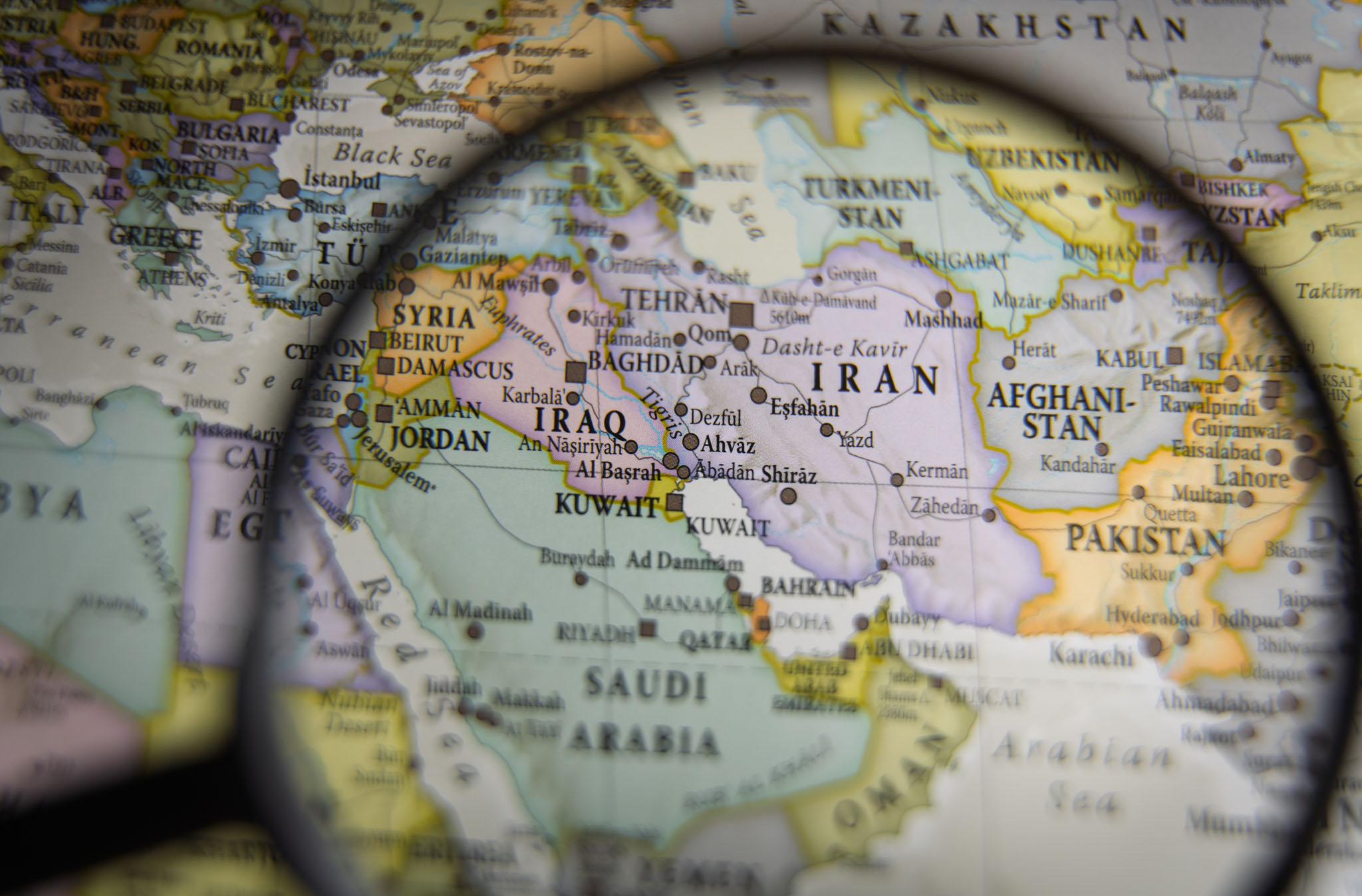
The escalating conflict between the U.S., Israel, and Iran is exacerbating a trend that many industries have been feeling for some time: increasing geopolitical uncertainty and volatile markets. Since approximately 20% of the world’s oil and LNG supply is transported through the Strait of Hormuz, tensions in the region quickly impact energy prices, raw material costs, and global supply chains. The packaging industry is no exception. At the same time, such market phases make it particularly clear that traditional growth models are reaching their limits, and the ability to continuously tap into new customers and markets is becoming a decisive factor for resilience and sustainable growth.
A recent analysis by GlobalData on the escalating conflict between the U.S., Israel, and Iran vividly illustrates how strongly geopolitical developments influence global economic structures today. While military conflicts are often initially perceived as political events, their economic impacts are felt primarily along international supply chains.
These developments are particularly relevant for companies in the packaging industry. Raw material prices, energy supplies, logistics structures, and consumer behaviour react immediately to geopolitical uncertainties. The conflict in the Middle East thus serves as a prime example of why geopolitical risks are increasingly becoming part of strategic corporate planning.
One of the world’s most important trade routes
At the centre of the current tensions lies the Strait of Hormuz, one of the world’s most strategically important energy trade routes.
According to data from the GlobalData analysis, approximately 20% of the world’s oil supply and about 20% of global LNG trade pass through this strait. Up to 20 million barrels of oil are transported there daily. This high concentration makes the global energy system particularly vulnerable to geopolitical tensions. Even short-term disruptions or security risks lead to significant price fluctuations in the energy and commodity markets.
During the current escalation, shipping traffic through the region dropped dramatically at times. According to reports, more than 150 merchant ships were waiting off the strait, while transit traffic fell by up to 80% at times. Such disruptions demonstrate how strongly a regional conflict can influence global trade structures.
Energy Prices as Cost Drivers for Industry and Packaging
The immediate economic impact is most evident in the energy markets. Right at the start of the escalation, oil prices rose by 10 to 13% in the short term solely due to geopolitical risks.
In potential escalation scenarios, an oil price of up to $150 per barrel is even being discussed. Such a price increase would have a significant impact on production costs in many industries.
This connection is particularly relevant for the packaging industry, as numerous materials are produced in an energy-intensive manner:
- Aluminum for cans and foils
- Petrochemical-based plastics such as PE, PP, or PET
- Glass packaging, which requires high energy inputs during production
- Paper and cardboard, whose production is highly energy-dependent
Rising energy prices therefore have an impact along the entire value chain, from raw material extraction through production to transportation.
Supply chains under pressure
In addition to energy and raw materials, geopolitical conflicts also affect global logistics structures. When key transport corridors are blocked or become unsafe, insurance premiums rise, transport times lengthen, and supply chains grind to a halt.
For packaging companies, this can mean, among other things:
- delayed raw material deliveries
- rising costs for petrochemical feedstocks
- higher prices for aluminum or specialty chemicals
- longer delivery times for machinery and equipment
It is particularly relevant to note that this region is not only used for transporting energy. A significant portion of trade in chemical precursors, fertilizers, and ammonia also passes through the region. For example, over 30% of global urea trade flows through this route, with indirect impacts on agriculture, the chemical industry, and petrochemical production chains.
Macroeconomic effects on demand and markets
In addition to direct production costs, geopolitical crises can also influence the broader economic environment.
Analyses suggest that a significant oil price shock could reduce global economic growth by about 0.3% while simultaneously increasing inflation by around 0.5 to 0.6 percentage points.
Rising energy prices act as a multiplier in this context:
- Transportation costs rise
- Production costs increase
- Demand for consumer goods may come under pressure
For consumer goods manufacturers, this often leads to cost-cutting programs or adjustments in product design. In the packaging industry, this manifests itself, for example, through greater material optimization, cost pressures along the supply chains, and increasing efficiency programs.
Growth Amid Uncertainty
The current conflict is exacerbating a trend that many industries have been feeling for some time: economic uncertainty is rising, while market growth in many industries may simultaneously stagnate or at least slow significantly.
In such market phases, traditional growth models often perform less effectively. Companies frequently rely on growth from existing customers, incremental market share gains, or generally rising market demand.
However, when markets become more uncertain and growth slows, these models reach their limits more quickly. It is precisely in such situations that active business development becomes a decisive factor.
New Customer Acquisition as a Resilience Strategy
Companies that want to grow steadily in volatile markets increasingly need the ability to systematically tap into new customers and new markets.
Especially in the packaging industry, we often see that many companies have historically been heavily focused on existing customer relationships. In stable markets, this model works very well. In uncertain times, however, this dependence quickly becomes a risk.
In contrast, companies that continuously acquire new customers and develop new business areas build significantly greater strategic resilience. Acquiring new customers thus becomes not just a sales task, but a central component of corporate strategy.
Conclusion
The conflict in the Middle East exemplifies how strongly geopolitical events can influence global markets. For companies in the packaging industry, this has direct implications, ranging from energy and raw material prices to supply chains and changes in consumer behaviour.
At the same time, such developments highlight how important it is to adapt growth strategies to an increasingly volatile market environment. In markets with high uncertainty, long-term stability is not achieved solely through efficiency or cost optimization, but above all through the ability to continuously develop new business and acquire new customers.
