

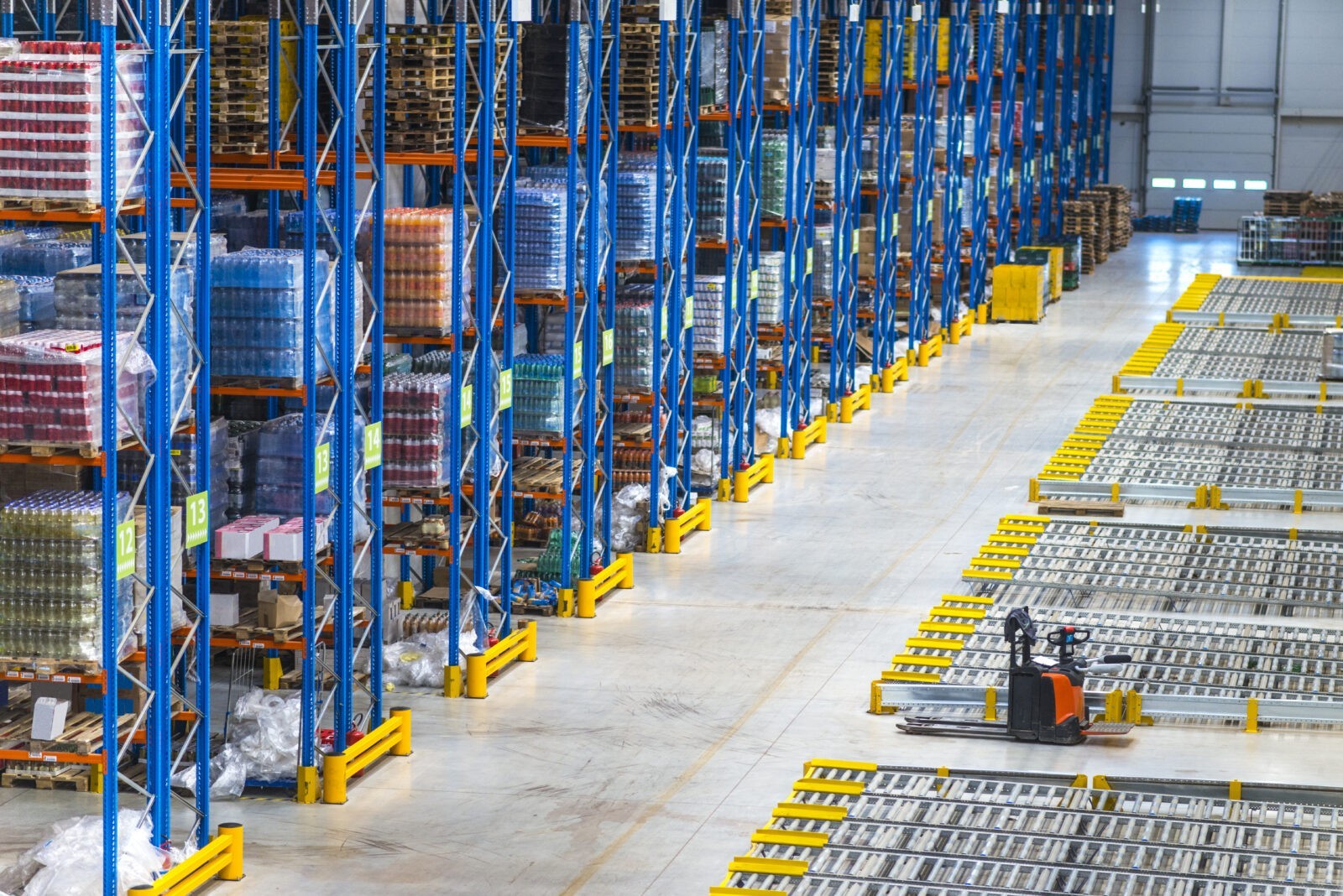
The new European Packaging Regulation PPWR will in future regulate and impose obligations not only on B2C packaging, but also on B2B packaging. This is a significant development, as commercial packaging accounts for 53 percent of the total volume of packaging waste. In our article, we highlight the challenges for industrial companies, look at the sectors in Germany that are particularly affected, identify key areas and special features with regard to packaging, and outline the first steps for all companies.
Background
When it comes to packaging, the public and the media usually only think of B2C packaging for consumer goods on supermarket shelves. However, commercial packaging (B2B) is more relevant in terms of the volume of packaging waste generated.
According to the latest packaging monitor published by the Society for Packaging Market Research (GVM) on behalf of the Alliance for Packaging and the Environment (AVU), B2B packaging accounted for 9.5 million tons representing 53 percent of packaging waste in Germany in 2023, while B2C packaging accounted for 8.4 million tons corresponding to 47 percent of the total volume.
Challenges for industrial companies
The new Packaging and Packaging Waste Regulation (PPWR) makes no distinction between the regulatory obligations for industrial, commercial, and consumer packaging.
- This is particularly evident in the fact that industrial and commercial packaging will also be subject to EPR responsibilities in future, which have been mandatory in all EU countries since January 2025. Dealing with the numerous national EPR systems alone represents a major challenge for all industrial companies.
- In addition, all other key provisions of the PPWR also apply to industrial and commercial packaging, such as
- the avoidance of excessive packaging,
- ensuring recyclability,
- the recycled content quota, and
- reusable targets
For details, we also recommend our PPWR Spotlight (pdf).
Industries and focal points
In the following, we take a look at individual industries in Germany that are characterized by intensive use of industrial and commercial packaging in business-to-business transactions. In doing so, we identify key areas and special features.
Construction and building materials industry
- Uses large quantities of packaging such as sacks (e.g. for cement and tile adhesive) as well as pallets, big bags, and plastic sheeting to secure loads.
- Market analyses show that sacks are the dominant form of packaging in this market.
Chemical and petrochemical industry
- Use of drums, canisters, IBCs, and big bags (FIBCs).
- In this industry, there is a high demand for packaging that meets the increased requirements for the transport of hazardous substances.
al and plant engineering
- This is a particularly important user industry in Germany, which is also due to the large number of component suppliers.
- On the packaging side, the industry is characterized by customized solutions for systems (e.g., made of wood) and packaging for export or for components.
Food and beverage industry
- Often large-format packaging solutions such as big bags, pallet containers, and stainless steel containers.
- Hygiene standards play a crucial role in raw materials and intermediate products for food and beverages.
Pharmaceutical and healthcare industry
- Use of drums, canisters, IBCs, and big bags (FIBCs).
- Packaging in this industry often has to have special qualities (e.g., inert, non-reactive), so the PPWR has provided for exceptions in various areas, such as
- no obligation to be recyclable according to design-for-recycling standards for packaging in direct contact with products until December 31, 2034,
- no obligation to use minimum proportions of post-consumer recycled material (PCR) in plastic packaging; currently no fixed date for reviewing this exemption from Article 7.
- The aspects of tamper resistance and labelling also play a special role.
Automotive and supplier industry
- Use of reusable transport boxes, mould inserts, and protective packaging, especially for sensitive car body parts.
- In this industry, too, packaging often must fulfil special functions, for example with regard to corrosion protection.
Electronics and high-tech industry
- Boxes, bags, and trays are among the most used types of packaging.
- Special requirements often arise in the areas of antistatic properties, padding, and protection against moisture.
Conclusion
- Looking at the packaging systems used, it is noticeable that many of them fall under the possible reusable obligations of the PPWR in accordance with Article 29 (1-3). These include, for instance, buckets, canisters, drums, IBCs, big bags, and pallets.
- This dominance reveals a significant difference from consumer packaging, which brings with it entirely new challenges.
- At the same time, however, companies should also be aware of the exceptions to the reusable obligations set out in the PPWR. This applies, for example, to customer-specific packaging for large machines or equipment, and for the transport of dangerous goods.
Has the issue of regulation already arrived in the B2B sector?
The answer is yes, certainly for mechanical and plant engineering as well as the chemical industry, but also for the automotive sector.
- We are well aware of this, not least because of our own consulting activities in the mechanical and plant engineering and chemical industry.
- Another good indicator is that the PPWR made it into the keynote speech at Automotive Logistics & Supply Chain 2025 (ALSC Europe 2025).
- The chairman of Odette International, the European network for standardization and optimization of business processes in the automotive industry, predicts that the industrial packaging system will undergo profound changes when he says: “There is no reason not to start [preparing for the PPWR] already, because you will definitely be required to do so. So, the sooner you start, the better.” To support this, the French automotive industry organization (Galia) is working with Odette and its partner organizations to develop recommendations for action and guidelines. A European guideline is expected to be published in the summer of 2025.
We are also increasingly advising distributors of industrial and commercial packaging on PPWR as part of our regulatory consulting services.
First steps for companies
As a first step, we recommend the PPWR Impact Assessment, which will give you an overview of the opportunities and risks of the PPWR for your company’s packaging portfolio. Initial information on this is provided by the PPWR Impact Assessment from BP Consultants. In addition, we are happy to assist you at any time in a personal consultation.
